This project is archived and no longer maintained. These docs stay available as a reference. The code stays available under its original license.
What I build now:
- Kubmin — per-workload cost, efficiency, and SCI/SEI intelligence for Kubernetes
- infai — a terminal control plane for local LLM inference: one profile shape for llama.cpp and vLLM, many models at once, live tokens/sec plus CPU/RAM/VRAM telemetry, hardware fit checks before launch
- infaiw — a daemon-based agent harness: sessions keep running after you close the terminal, sidecar loops must pass an acceptance check before reporting back, every event lands on a durable branchable timeline, and approvals wait for you
Want to take over maintenance of kli? If you still depend on it and would like to become the maintainer, reach out on Discord or open an issue.
Azure
Categories:
Azure support for Self-Managed and Managed Kubernetes Clusters
Azure credentials are required to access clusters. These credentials are sensitive information and must be kept secure.
Azure Credential Requirements
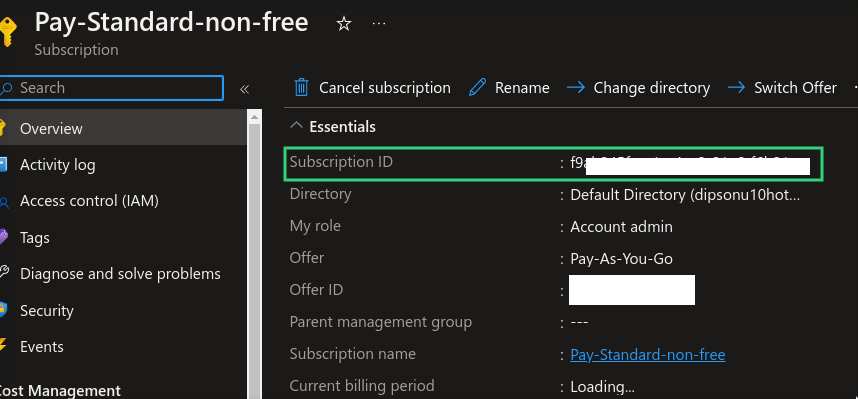
Subscription ID
Your Azure subscription identifier can be found in your subscription details.
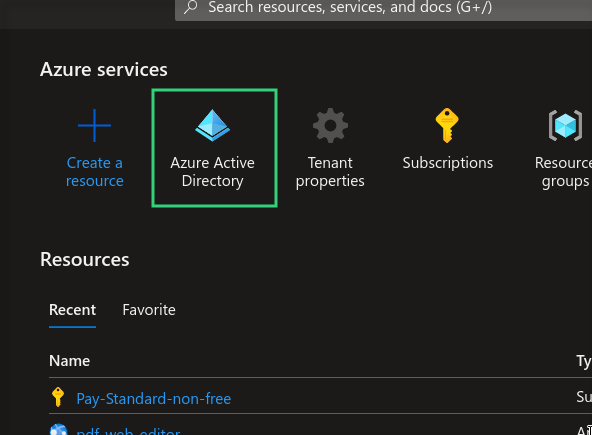
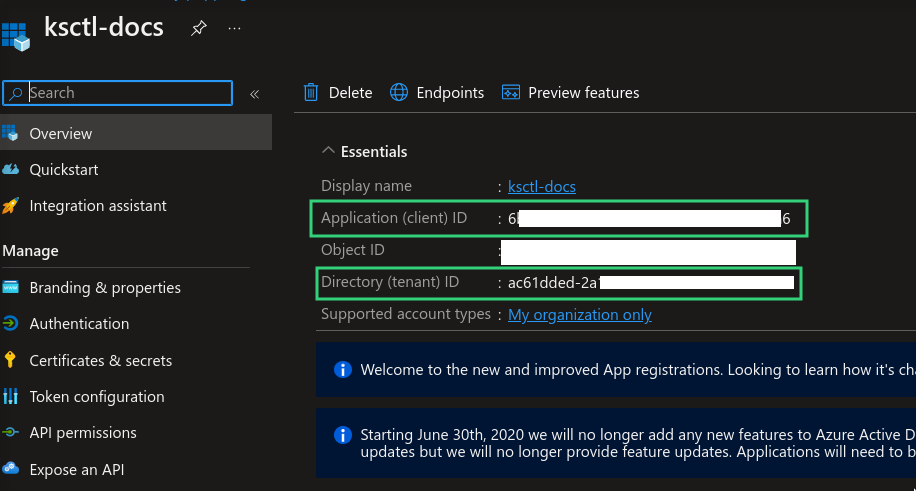
Tenant ID
Located in the Azure Dashboard, which provides access to all required credentials.
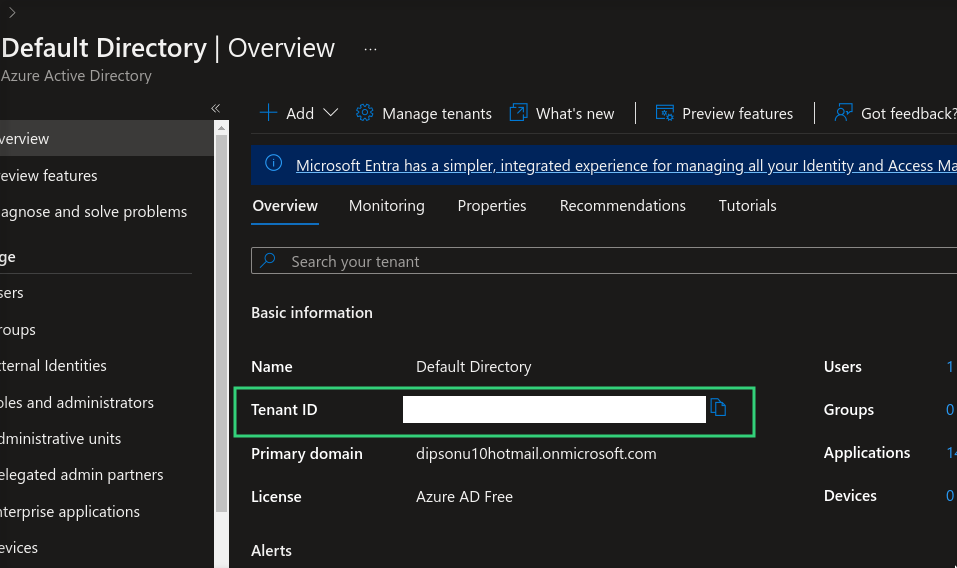
To locate your Tenant ID:
Client ID (Application ID)
Represents the identifier of your registered application.
Steps to create:
- Navigate to App Registrations
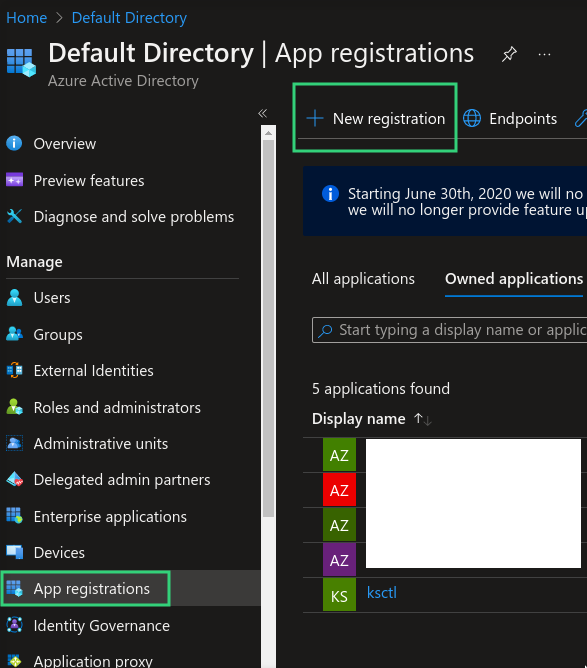
Register a new application
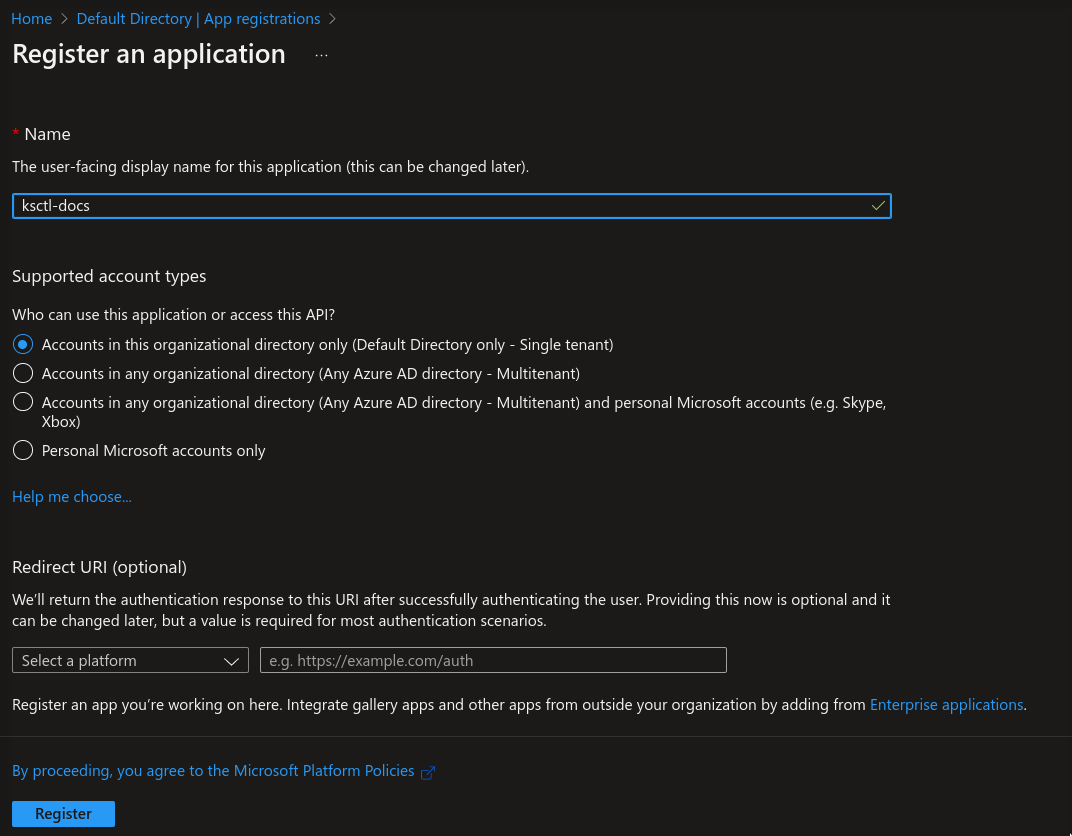
Obtain the Client ID
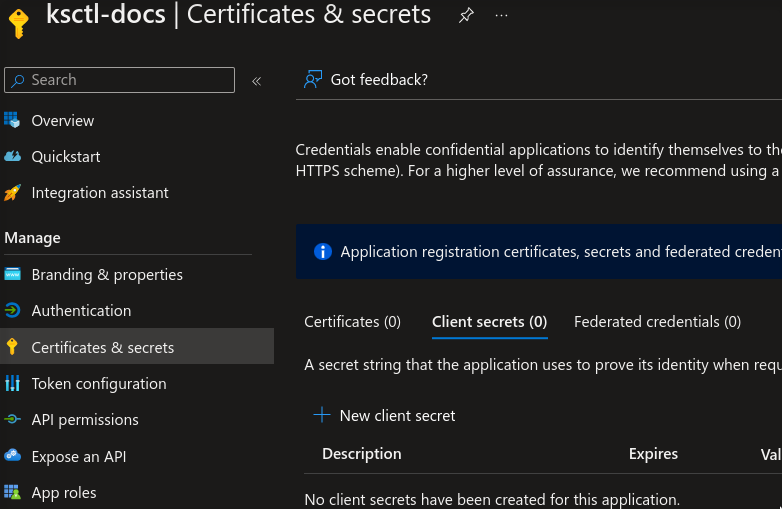
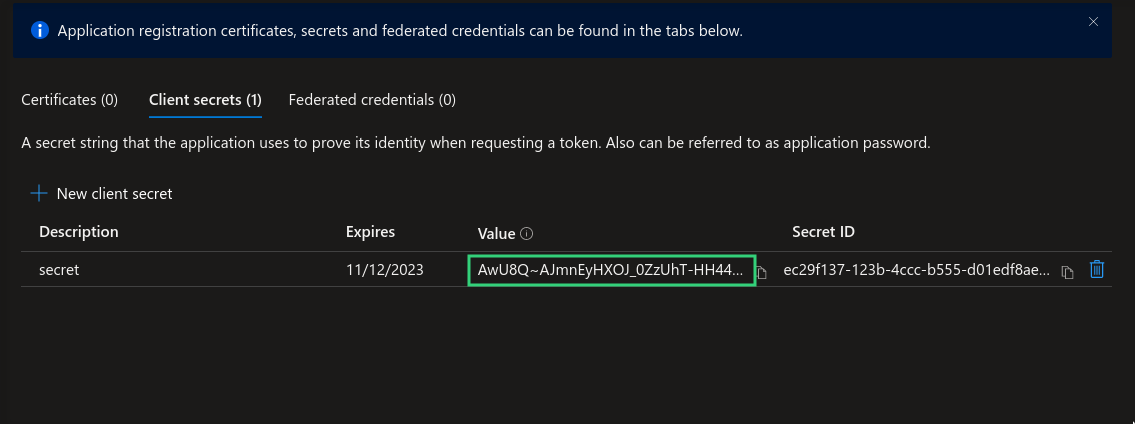
Client Secret
Authentication key for your registered application.
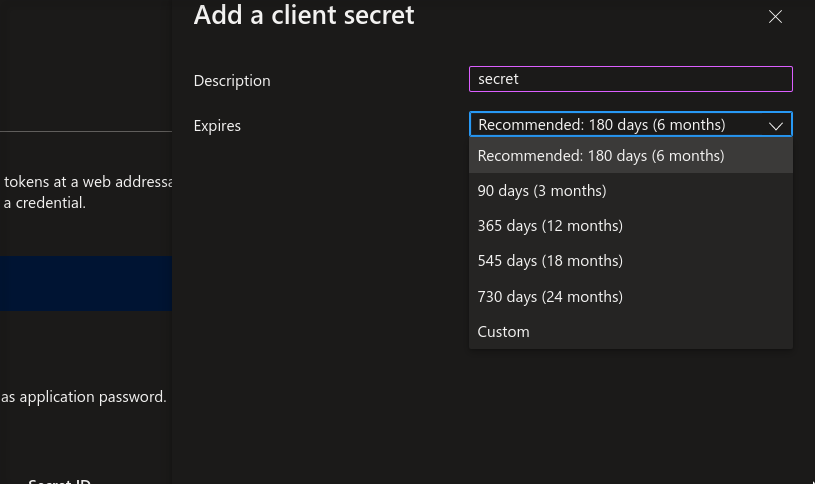
Steps to generate:
Access secret creation
Configure secret settings
Save the generated secret
Role Assignment
Configure application permissions:
- Navigate to Subscriptions > Access Control (IAM)
- Select “Role Assignment”
- Click “Add > Add Role Assignment”
- Create new role and specify the application name
- Configure desired permissions
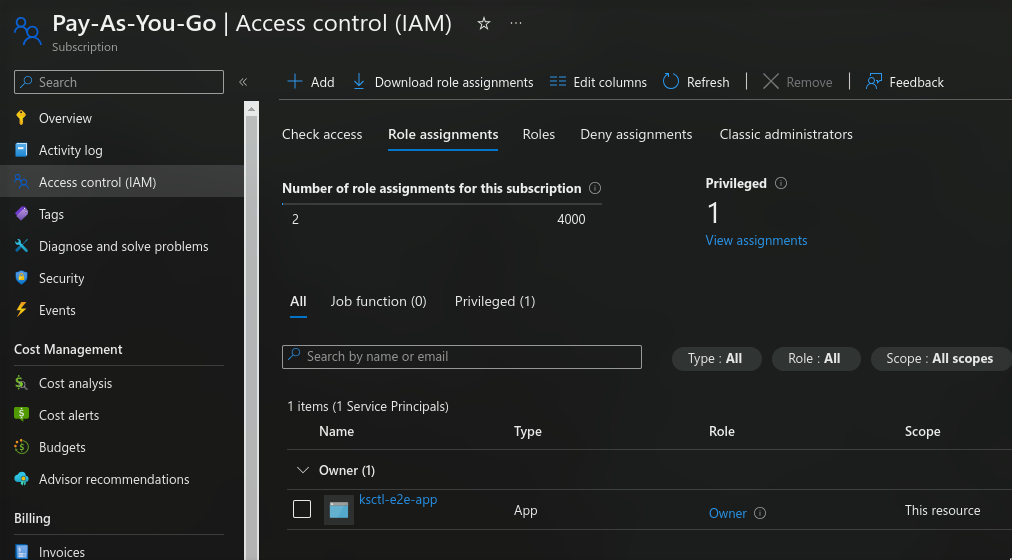
You can create a custom Role and then attach to this app if you want fine grained permission Beta
{
    "properties": {
        "roleName": "Ksctl",
        "description": "Kubmin.ksctl.com",
        "assignableScopes": [
            "/subscriptions/<subscription_id>"
        ],
        "permissions": [
            {
                "actions": [
                    "Microsoft.ContainerService/register/action",
                    "Microsoft.ContainerService/unregister/action",
                    "Microsoft.ContainerService/operations/*",
                    "Microsoft.ContainerService/managedClusters/*",
                    "Microsoft.ContainerService/managedclustersnapshots/*",
                    "Microsoft.ContainerService/containerServices/*",
                    "Microsoft.ContainerService/deploymentSafeguards/*",
                    "Microsoft.ContainerService/locations/*",
                    "Microsoft.ContainerService/snapshots/*",

                    "Microsoft.Network/register/action",
                    "Microsoft.Network/unregister/action",
                    "Microsoft.Network/checkTrafficManagerNameAvailability/action",
                    "Microsoft.Network/internalNotify/action",
                    "Microsoft.Network/getDnsResourceReference/action",
                    "Microsoft.Network/queryExpressRoutePortsBandwidth/action",
                    "Microsoft.Network/checkFrontDoorNameAvailability/action",
                    "Microsoft.Network/privateDnsZonesInternal/action",
                    "Microsoft.Network/adminNetworkSecurityGroups/*",
                    "Microsoft.Network/applicationGateways/*",
                    "Microsoft.Network/ApplicationGatewayWebApplicationFirewallPolicies/*",
                    "Microsoft.Network/applicationGatewayAvailableRequestHeaders/*",
                    "Microsoft.Network/applicationGatewayAvailableResponseHeaders/*",
                    "Microsoft.Network/applicationGatewayAvailableServerVariables/*",
                    "Microsoft.Network/applicationGatewayAvailableSslOptions/*",
                    "Microsoft.Network/applicationGatewayAvailableWafRuleSets/read",
                    "Microsoft.Network/applicationSecurityGroups/*",
                    "Microsoft.Network/operations/*",
                    "Microsoft.Network/azurefirewalls/*",
                    "Microsoft.Network/azureFirewallFqdnTags/read",
                    "Microsoft.Network/dnsResolvers/*",
                    "Microsoft.Network/dnszones/*",
                    "Microsoft.Network/dnsoperationresults/*",
                    "Microsoft.Network/firewallPolicies/*",
                    "Microsoft.Network/gatewayLoadBalancerAliases/*",
                    "Microsoft.Network/ipAllocations/*",
                    "Microsoft.Network/ipGroups/*",
                    "Microsoft.Network/loadBalancers/*",
                    "Microsoft.Network/natGateways/*",
                    "Microsoft.Network/networkInterfaces/*",
                    "Microsoft.Network/virtualNetworks/*",
                    "Microsoft.Network/virtualNetworkGateways/read",
                    "Microsoft.Network/virtualNetworkGateways/write",
                    "Microsoft.Network/virtualNetworkGateways/delete",
                    "microsoft.network/virtualnetworkgateways/*",
                    "Microsoft.Network/virtualRouters/*",

                    "Microsoft.Resources/checkResourceName/action",
                    "Microsoft.Resources/changes/*",
                    "Microsoft.Resources/deployments/*",
                    "Microsoft.Resources/deploymentScripts/*",
                    "Microsoft.Resources/deploymentStacks/*",
                    "Microsoft.Resources/locations/*",
                    "Microsoft.Resources/providers/*",
                    "Microsoft.Resources/links/*",
                    "Microsoft.Resources/resources/*",
                    "Microsoft.Resources/subscriptions/*",
                    "Microsoft.Resources/subscriptions/locations/*",
                    "Microsoft.Resources/subscriptions/resourceGroups/*",
                    "Microsoft.Resources/subscriptions/providers/*",
                    "Microsoft.Resources/subscriptions/operationresults/*",
                    "Microsoft.Resources/subscriptions/resources/*",
                    "Microsoft.Resources/subscriptions/tagNames/*",
                    "Microsoft.Resources/subscriptionRegistrations/*",
                    "Microsoft.Resources/tags/*",
                    "Microsoft.Resources/templateSpecs/*",
                    "Microsoft.Resources/templateSpecs/versions/*",
                    "Microsoft.Resources/tenants/*",

                    "Microsoft.ManagedIdentity/register/*",
                    "Microsoft.ManagedIdentity/operations/*",
                    "Microsoft.ManagedIdentity/identities/*",
                    "Microsoft.ManagedIdentity/userAssignedIdentities/*"
                ],
                "notActions": [],
                "dataActions": [],
                "notDataActions": []
            }
        ]
    }
}
Authentication Methods
Command Line Interface
ksctl configure cloud
Available Cluster Types
Self-Managed Clusters
Self-managed clusters with the following components:
- Distributed etcd database instances
- HAProxy load balancer for control plane high availability
- Multiple control plane nodes
- Worker nodes
Bootstrap options:
- k3s (lightweight Kubernetes distribution)
- kubeadm (official Kubernetes bootstrap tool)
Azure Kubernetes Service (AKS)
Fully managed Kubernetes service by Azure.
Cluster Management Features
Managed Clusters (AKS)
- Create and delete operations
- Cluster switching
- Infrastructure updates currently not supported
High Availability Clusters
- Worker node scaling (add/remove)
- Secure SSH access to all components:
- Database nodes
- Load balancer
- Control plane nodes
- Worker nodes
- Protected by SSH key authentication
- Public access enabled
Looking for CLI Commands?
All CLI commands mentioned in this documentation have detailed explanations in our command reference guide.
👉 Check out our comprehensive CLI Commands Reference for:
- Detailed command syntax
- Usage examples
- Available options and flags
- Common use cases
Feedback
Was this page helpful?
Glad to hear it! Please tell us how we can improve.
Sorry to hear that. Please tell us how we can improve.